

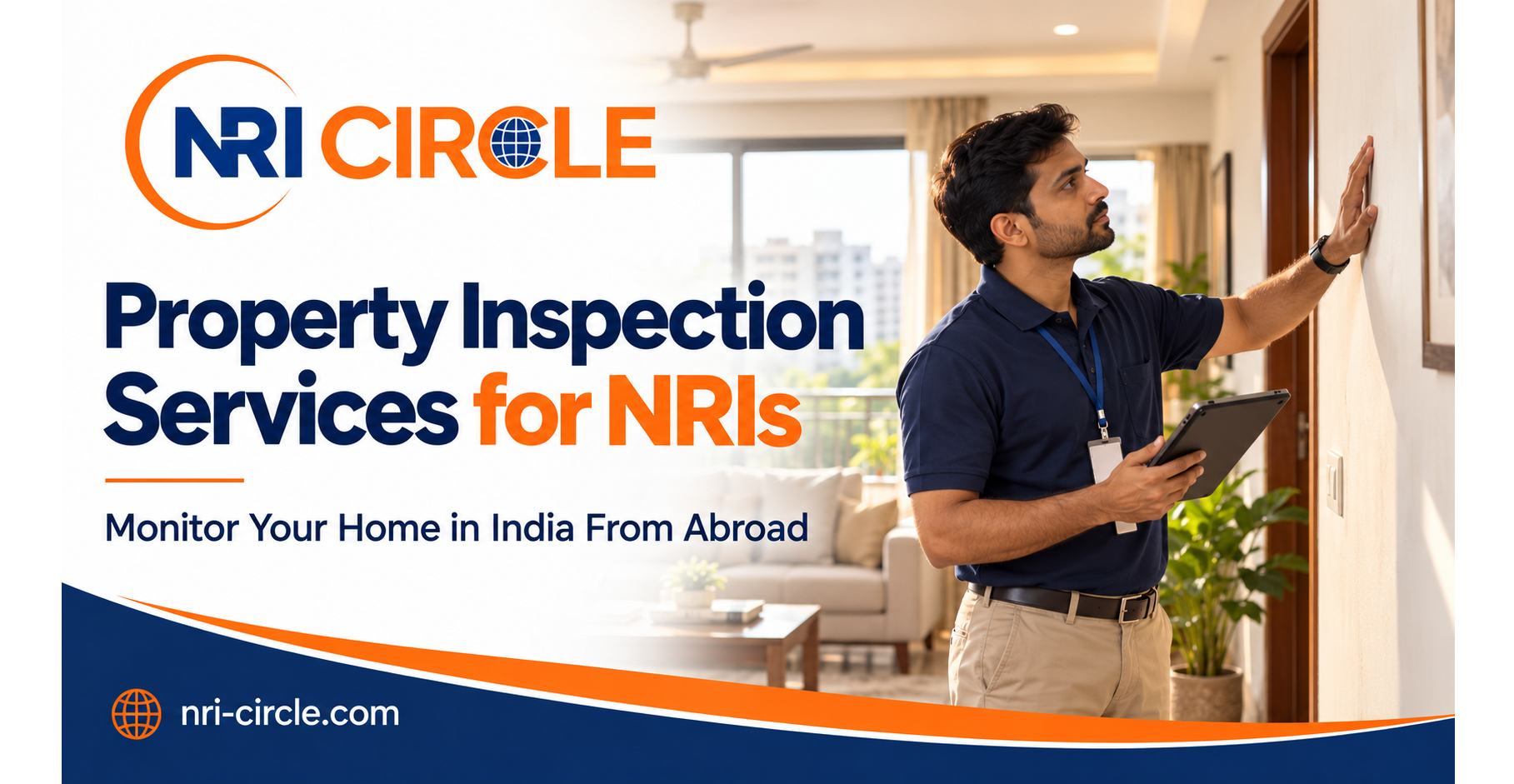
Property inspection services for NRIs help owners check the visible condition of their homes in India while living abroad.
A local representative visits the property, follows an agreed checklist, takes photographs and shares a written report. These updates help owners identify maintenance concerns, arrange repairs and make informed decisions without travelling for every issue.
Whether you live in the UAE, the UK, the US, Canada, Australia, Singapore or elsewhere, a home in India still needs attention. A locked apartment can develop damp patches. A rented house may need maintenance. A small plumbing problem can remain unnoticed between visits.
With a clear inspection process and reliable local support, you can stay informed about your property and decide what needs attention.
What Are Property Inspection Services for NRIs?
Property inspection services involve an authorised visit to a home to record its accessible, visible condition. The scope should be agreed before the visit so that both the owner and the person inspecting know what needs checking.
A routine inspection may include:
-
Looking for visible water leakage, dampness and mould.
-
Checking the condition of doors, windows and locks.
-
Recording wall, ceiling and flooring damage.
-
Noting pest activity or cleaning requirements.
-
Checking accessible taps and plumbing fixtures where permitted.
-
Photographing rooms and any concerns.
-
Preparing a written summary with suggested next steps.
A routine property visit is a visual condition check. Suspected structural problems, concealed leaks or electrical faults require assessment by an appropriately qualified professional.
For NRIs, the main benefit is having a documented picture of the property’s condition instead of relying on occasional verbal updates.
Why Does Your Property in India Need Regular Inspections?
An unoccupied property can look secure from the outside while problems develop indoors. When nobody visits regularly, even an obvious maintenance issue can go unreported.
For example, a small leak beneath a sink may damage a cabinet before your next trip to India. Rainwater entering through a window can leave damp patches that are difficult to notice without an interior visit.
Regular property inspections can help you:
-
Identify visible maintenance issues earlier.
-
Prioritise cleaning and repair work.
-
Compare the property’s condition between visits.
-
Prepare the home before your arrival.
-
Maintain records of reported concerns and completed work.
Inspections cannot prevent every problem, but they give you information that helps you respond sooner.
What Should an NRI Property Inspection Checklist Include?
A useful checklist should match the property’s layout, occupancy and known maintenance concerns. A vacant apartment needs different attention from a rented independent house.
1. Doors, Windows and Access Points
The visit should record the visible condition of the main entrance, accessible doors, windows and locks.
Look for damaged frames, broken glass, signs of water entry and locks that do not operate properly. Any concern about access should be reported promptly.
Owners should also agree on who holds the keys and how access will be recorded before arranging a vacant home inspection.
2. Walls, Ceilings and Floors
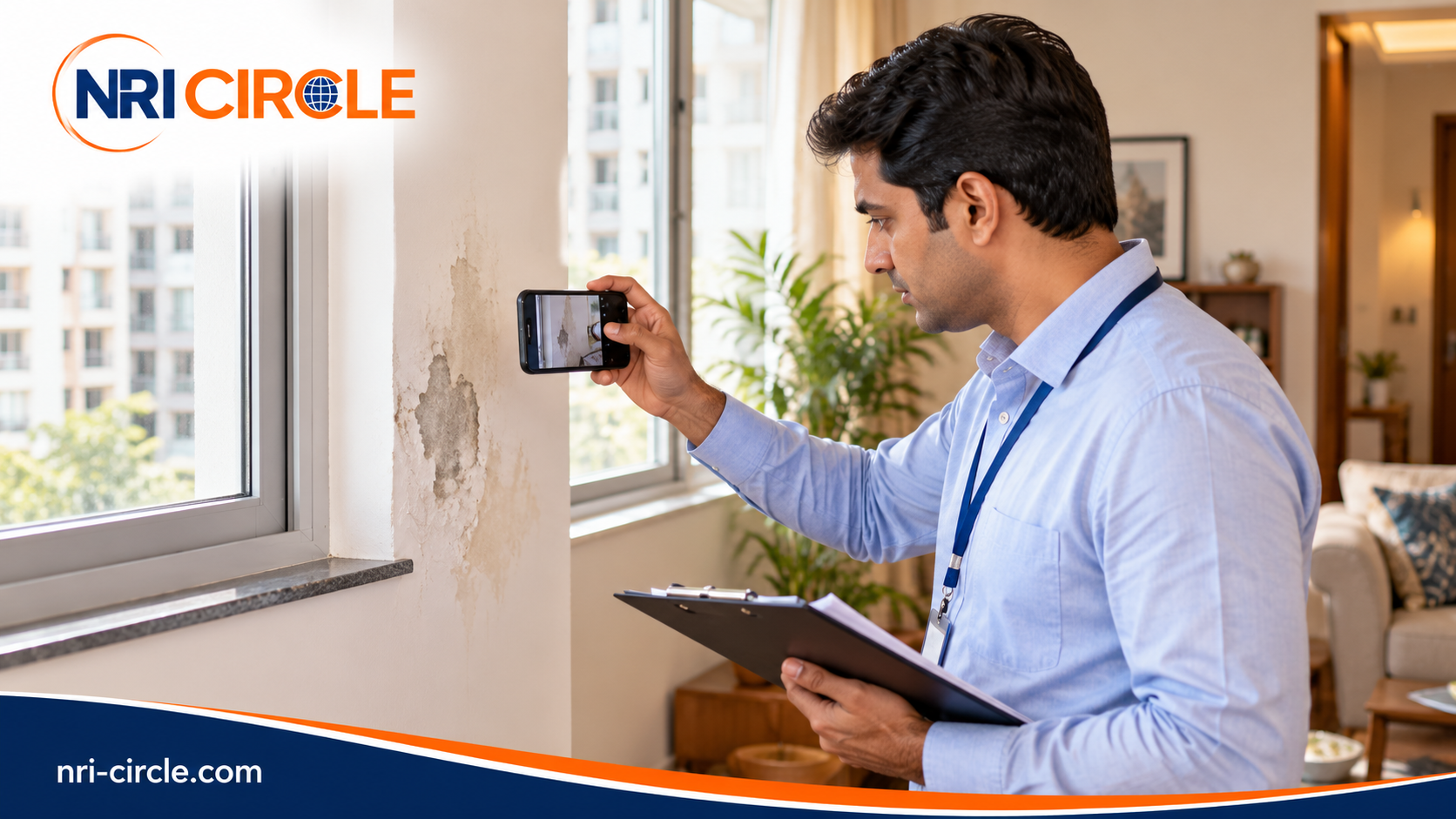
Photographs should show the general condition of each room, along with close-ups of any visible damage.
Common observations include peeling paint, discolouration, damp patches, cracked tiles and changes in existing cracks. A report should describe what is visible without guessing the cause.
For instance, “a damp patch on the bedroom ceiling near the window” is more useful than an unsupported conclusion that the roof needs replacement.
3. Plumbing and Water Leakage
Where water is available and checks are authorised, the inspection may include accessible taps, exposed pipes, toilet areas and spaces beneath sinks.
The report should note visible dripping, wet surfaces, standing water or unusual staining. If the source is unclear, a plumber may need to investigate separately.
4. Visible Electrical Concerns
A routine visit may record visibly damaged switches, loose fittings or other obvious concerns. Whether lights or appliances are operated should be agreed in advance.
Electrical panels, exposed wires and faulty equipment should be handled by a qualified electrician.
5. Cleanliness, Ventilation and Pests
Closed homes may need attention to dust, musty smells, pest activity and moisture.
The report should identify rooms that need cleaning and record visible signs such as droppings, insect activity or damage to stored items. Any cleaning or pest-control treatment should be quoted and approved separately.
6. Balconies and Accessible Outdoor Areas
Where access is safe and permitted, check balconies, utility areas and other spaces included in the agreed scope.
Record debris, standing water, blocked visible outlets or damage. Concerns involving shared building areas may need to be raised with the housing society or building manager.
Vacant Home Inspection vs Rented Property Inspection
Inspecting a Vacant Home
A vacant home inspection focuses on the condition of a property that has little regular use.
Priorities often include water entry, dampness, pests, cleanliness, accessible fixtures and the visible condition of entrances. It can also help identify work needed before a family visit or a new tenancy.
For owners living abroad, clear photographs are especially useful because they show whether the home is ready to use.
Inspecting a Rented Property
A rented property inspection requires coordination with the tenant and appropriate permission under the rental arrangement.
The focus may include maintenance concerns, reported damage and the condition of accessible areas. Visits should be scheduled respectfully, with an agreed scope.
Property care for NRIs works best when owners, tenants and local representatives understand how issues will be reported and who can approve the next step.
How Often Should NRIs Arrange Property Inspections?
The right inspection frequency depends on whether the home is occupied, its condition, previous problems and local weather exposure.
A vacant home with a history of leaks may need closer attention than an occupied apartment with reliable maintenance support. An additional inspection can be useful before your arrival, after repairs or following a reported incident.
When choosing a schedule, consider:
-
How long the property remains unoccupied.
-
Whether someone already checks it locally.
-
Previous leakage, dampness or pest problems.
-
The property’s age and maintenance history.
-
Upcoming travel, tenancy changes or repair work.
Start with the property’s actual needs and review the schedule when circumstances change.
What Should a Property Inspection Report Include?
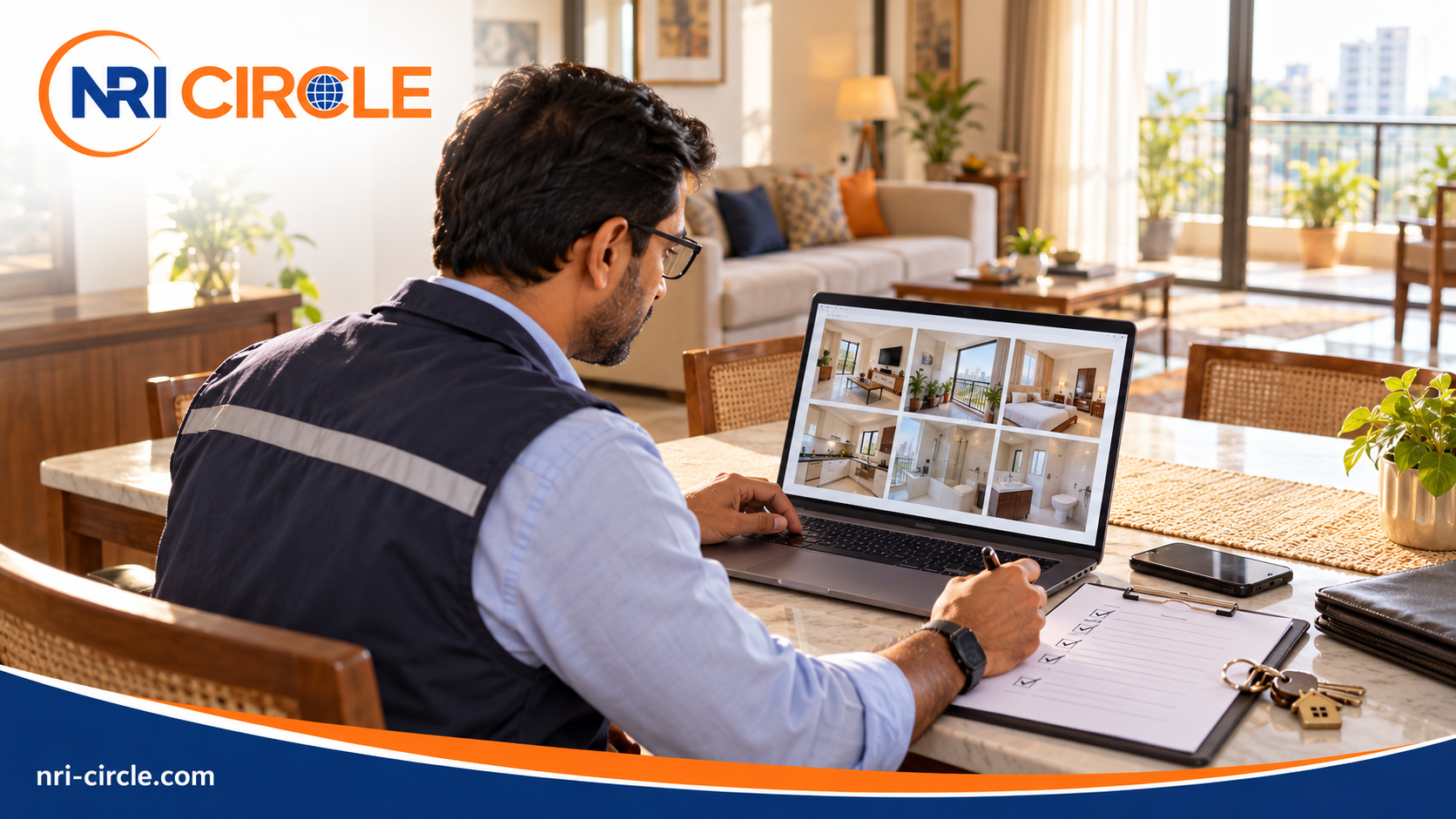
A good report should make it easy to understand what was checked, what was found and what requires a decision.
Ask for:
-
The property address and inspection date.
-
Areas visited and any areas that could not be accessed.
-
Clear room photographs and close-ups of concerns.
-
Written observations linked to the photographs.
-
A distinction between new and previously reported issues.
-
Recommended follow-up, including specialist assessment where needed.
For remote property monitoring, consistent reporting helps. Photographs taken from similar positions make it easier to compare the home’s condition over time.
Avoid relying only on a message saying, “Everything is fine.” A useful report provides enough detail to support that conclusion.
What Happens If an Inspection Finds a Problem?
Finding an issue should lead to a clear approval process.
First, review the photographs and written observations. If the cause or seriousness is uncertain, arrange an assessment by the relevant professional.
Before approving repairs, request a written scope and estimate covering the proposed work, materials where relevant, expected timing and payment terms. Agree on who can authorise additional costs.
After completion, ask for photographs and a summary of the work carried out. For larger or specialist jobs, an appropriate follow-up assessment may also be necessary.
Inspection and repair serve different purposes: the first documents the concern, while the second addresses it.
How to Choose Property Inspection Services for NRIs
When comparing providers, focus on how clearly they explain the service.
Confirm location coverage. Share the property’s Indian PIN code and check whether support is available at that address.
Agree on the checklist. Ask exactly which rooms, fixtures and accessible areas are included.
Request a sample report. This helps you assess the quality of photographs and written observations.
Clarify access arrangements. Establish how keys, tenant coordination and visit permissions will be handled.
Understand pricing. Check the inspection charge and whether travel, specialist assessments or follow-up visits cost extra.
Set communication expectations. Agree on how reports will be shared and how urgent concerns will be escalated across time zones.
A clear process matters more than a broad promise to “take care of everything.”
How NRI Circle Can Help With Property Care in India
NRI Circle lists property management support that includes periodic inspections with photo reports, alongside services such as cleaning and repairs. Its website also describes coordination through local vendors and a dedicated Relationship Manager.
For an NRI managing a home remotely, this can provide a way to coordinate local visits and receive updates through one point of contact.
Before booking, share your property location, occupancy status and inspection requirements. Confirm coverage, the agreed checklist, reporting arrangements and the final price for your address, as service availability and rates depend on location.
Explore NRI Circle’s services to discuss the support available for your home in India.
Stay Informed About Your Home in India
Managing a property from abroad becomes easier when you have clear updates, photographs and a reliable process for follow-up. An agreed inspection checklist helps you understand the home’s visible condition and decide what needs attention.
Need someone to check your property in India? Visit NRI Circle and share your location and requirements to check available property inspection support.