

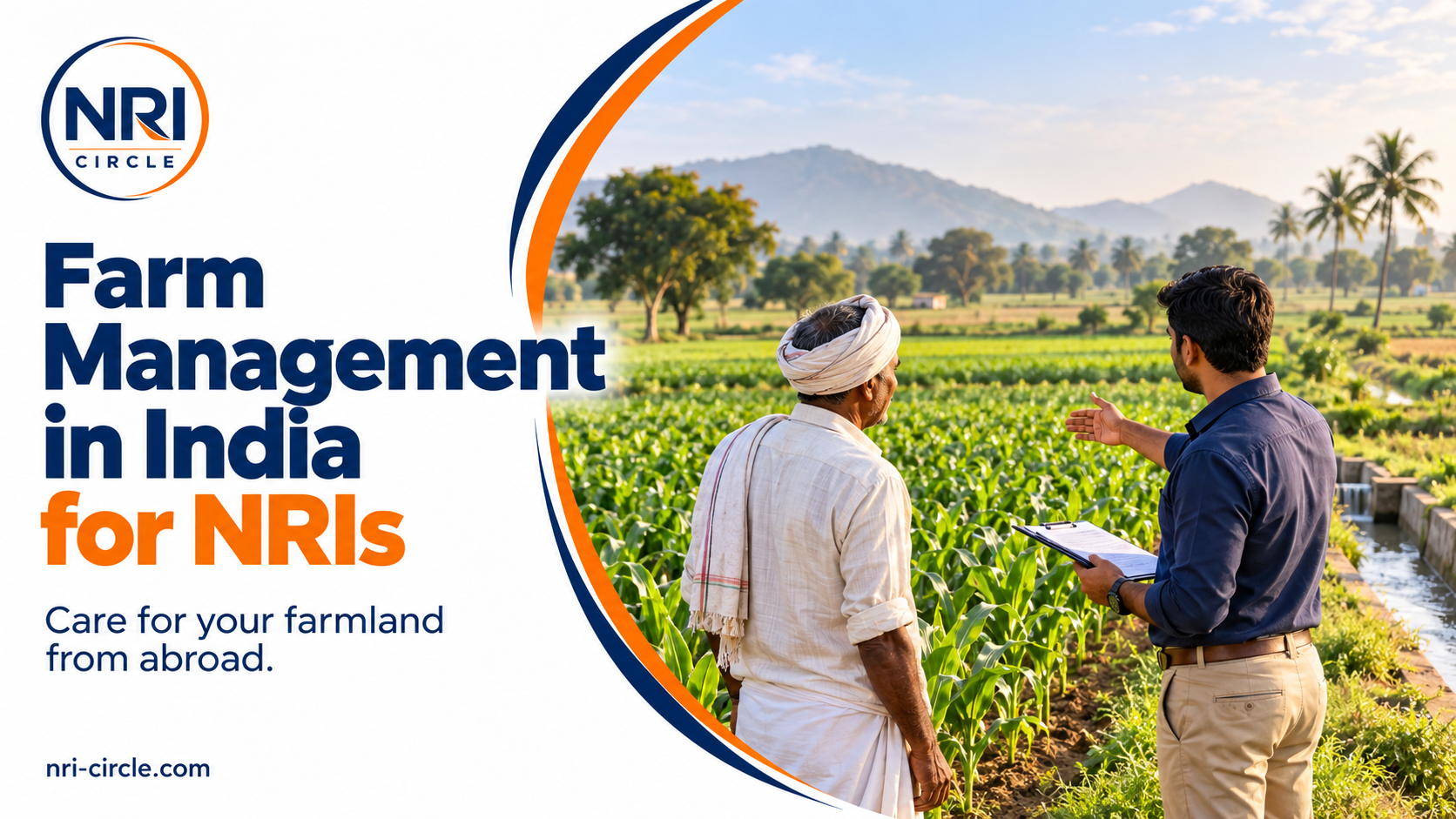
Farm Management in India for NRIs: How to Care for Your Farmland From Abroad
Managing farmland in India while living abroad starts with reliable local support, scheduled inspections and clear updates. A practical arrangement helps you understand the condition of your land, coordinate necessary work and review expenses without travelling for every task.
For many Indians overseas, a farm represents more than property. It may be inherited land, a working agricultural business or a connection to family roots. Keeping that connection meaningful requires knowing what is happening on the ground.
This guide explains how farm management in India for NRIs can help you organize responsibilities, choose suitable support and stay informed about your farmland.
Why Farmland Needs Attention When You Live Abroad
A farm’s needs change throughout the year. Seasonal rainfall, irrigation problems, damaged fencing and access issues can all require someone nearby to inspect the situation.
Relatives or neighbours may help occasionally, but their availability can vary. Without clearly assigned responsibilities, even small maintenance tasks can remain pending.
Managing farmland from abroad becomes more manageable when you know who will visit, what they will check and how they will report their findings.
Start by asking yourself:
-
Who currently checks the farm?
-
When did you last receive recent photographs?
-
Which repairs or maintenance tasks are pending?
-
Who can respond when an issue needs local attention?
Your answers will help identify the support you actually need.
What Is Farm Management for NRIs?
Farm management for NRIs involves arranging local oversight and coordinating agreed tasks for farmland in India while the owner lives overseas.
The scope can vary considerably. One owner may need an occasional inspection of unused land. Another may need regular updates from a working farm and coordination with an existing caretaker.
It is useful to distinguish between three types of assistance:
Farm inspection: Visiting the land, documenting visible conditions and reporting concerns.
Maintenance coordination: Arranging approved work, such as repairs or upkeep, through suitable local providers.
Agricultural management: Making crop, irrigation and production decisions, which requires relevant agricultural expertise.
Before choosing NRI farm management services, confirm which responsibilities the provider will undertake.
1. Begin With a Clear Farm Profile
Local support works better when the person visiting has accurate information.
Prepare a simple farm profile containing the location, access directions, approximate area, existing crops and contact details for any caretaker or worker.
Also explain your priorities. Do you want the land inspected periodically? Are you concerned about irrigation equipment? Is your main requirement to document its current condition?
Include any access restrictions and identify who can authorize entry.
If you are exploring broader assistance for your responsibilities back home, NRI Circle’s services in India provide a starting point for understanding its support model.
2. Arrange Farm Inspections With Useful Reports
Photographs can help you stay connected to the farm, but a useful inspection should explain what those photographs show.
Agree on the areas to be checked during each visit. Depending on the property, these might include:
-
Entry points and access paths.
-
Visible fencing and boundary markers.
-
Irrigation equipment and water storage.
-
Farm buildings or storage areas.
-
Visible crop conditions.
-
Pending maintenance work.
Request dated photographs and a short written summary. Where practical, ask for photographs taken from similar positions during successive visits so that changes are easier to compare.
Farm inspection services should also identify issues requiring a specialist. A general site visit cannot establish legal boundaries or replace an agricultural assessment.
NRI Circle’s catalogue lists a Farm Visit & Inspection Report service. Explore its farm management service options and confirm availability for your farm’s location. NRI Circle
3. Set a Schedule Around Your Farm’s Needs
There is no single inspection schedule suitable for every farm.
Unused land may need a different arrangement from a farm with active cultivation. Visits may also become more useful before seasonal work, after significant weather events or following a reported maintenance problem.
Discuss the schedule with the person responsible for local oversight. Specify which situations require an additional visit and who can approve it.
For example, an owner might arrange routine updates and request an extra inspection after a caretaker reports damage to a pump.
A schedule built around actual needs makes farmland management in India more practical than relying on irregular calls.
4. Coordinate Irrigation and Maintenance Carefully
Water systems, pumps, fencing and access routes can require regular attention. When you live overseas, the challenge is often coordinating inspection, obtaining an estimate and confirming that the work is completed.
Use a straightforward approval process:
-
Ask for a description and photographs of the issue.
-
Request a written estimate.
-
Confirm the scope and approve the cost.
-
Obtain completion photographs and receipts.
-
Record any follow-up work required.
Ask whether the quoted amount includes materials, labour and transport.
For irrigation faults or equipment repairs, use people with the relevant skills. Local coordination helps arrange the work; technical decisions should be made by the appropriate specialist.
5. Keep Crop Decisions With Suitable Agricultural Experts
If your land is actively cultivated, you may need updates on planting, irrigation, crop development and harvesting.
However, reporting crop conditions is different from advising on them. A photograph alone may not explain the cause of poor growth or determine the correct treatment.
For crop selection, pest concerns, fertilizer use or irrigation planning, involve a qualified agricultural professional familiar with local conditions.
Clarify whether your service provider offers agricultural expertise or only coordinates visits and communication.
This distinction helps you choose farm management services for NRIs that match your expectations.
6. Define the Caretaker’s Responsibilities
A caretaker, relative or farm worker may already be looking after the property. Additional support should fit around that arrangement.
Write down who is responsible for inspections, maintenance requests, recordkeeping and updates.
Also agree on spending limits. Which expenses need your approval? Who will obtain estimates? What happens when you are unavailable because of a time-zone difference?
Clear responsibilities reduce repeated calls and help prevent misunderstandings.
Keep instructions accessible to everyone involved, and review them whenever the arrangement changes.
7. Organize Farm Records and Expenses
An orderly record of visits and payments helps you understand what has been completed and what remains pending.
Keep copies of:
-
Inspection reports and photographs.
-
Approved estimates.
-
Maintenance receipts.
-
Caretaker payment records.
-
Relevant land documents.
-
Written instructions and agreements.
Store sensitive documents securely and share them only with people who need access.
For questions about ownership, boundaries, inheritance or agreements, consult a qualified local legal professional. Operational farm support should not be treated as legal verification.
You can also review NRI Circle’s service catalogue for documentation and legal assistance options relevant to your requirements.
8. Choose a Provider Based on Scope and Communication
Before booking, ask how the provider will handle your specific farm.
Useful questions include:
-
Do you cover the farm’s exact location?
-
What does each visit include?
-
Who will carry out the inspection?
-
What relevant experience do they have?
-
Will I receive photographs and a written report?
-
How are extra visits and maintenance tasks charged?
-
Which work requires separate specialist support?
Ask for the agreed scope in writing. Understand the difference between arranging a task and taking responsibility for ongoing agricultural operations.
A good arrangement for agricultural land maintenance should give you clear information about the work, costs and reporting process.
How NRI Circle Can Help With Farm Management Requests
NRI Circle lists Farm Management among its service categories, including a general Farm Management Service Request, Farm Visit & Inspection Report and Drone Survey of Farm Land. Availability and pricing depend on the service location and should be confirmed before booking. NRI Circle
A sensible first step is to explain your farm’s location, current condition and the assistance you need. Ask whether a one-time inspection or an ongoing arrangement would suit the requirement.
You can contact NRI Circle about your farm management needs to discuss local coverage, the proposed scope and reporting expectations.
Stay Connected to Your Farmland in India
Looking after a farm from overseas becomes easier when local responsibilities are clear and updates are useful. Start with the condition of your land, identify the tasks that need attention and agree on how work will be approved and reported.
Explore NRI Circle’s farm management services, or contact the team to discuss support for your farmland in India.